
The first piston ring in a diesel engine operates under the most severe thermal and mechanical conditions, making it highly susceptible to multiple failure modes. Its primary functions—sealing combustion gases, transferring heat to the liner, and controlling oil—expose it to extreme temperatures, pressures, and friction. One common failure mode is excessive wear, typically caused by abrasive particles (e.g., dust ingress, poor filtration) or inadequate lubrication. This leads to loss of sealing, blow-by, and reduced engine efficiency. Scuffing and scoring are also frequent, often resulting from oil film breakdown under high load or insufficient oil supply. This creates localized metal-to-metal contact, producing high friction and surface damage. Thermal fatigue cracking is another critical issue. The first ring experiences cyclic thermal stresses due to rapid heating during combustion and cooling during intake. Over time, this can initiate microcracks, especially near the ring gap or sharp edges, eventually leading to fracture. Ring sticking (loss of mobility in the groove) occurs when carbon deposits or varnish build up, restricting ring movement. This prevents proper sealing and heat transfer, often accelerating wear and increasing blow-by. Butting failure happens when thermal expansion causes the ring ends to close completely, generating high compressive stress and potential breakage. This is usually due to insufficient end gap design or abnormal overheating. Additionally, corrosion and chemical attack from fuel contaminants (e.g., sulfur) or degraded lubricants can weaken the ring material over time. Root cause analysis typically points to a combination of factors: poor combustion quality, improper lubrication, inadequate cooling, material deficiencies, or incorrect ring design (e.g., coating, profile, or end gap). Preventive actions include improving air and oil filtration, ensuring proper lubrication and cooling, optimizing combustion, and selecting appropriate ring materials and coatings (such as chromium or molybdenum). Regular inspection and oil analysis also help detect early signs of failure, minimizing the risk of catastrophic engine damage.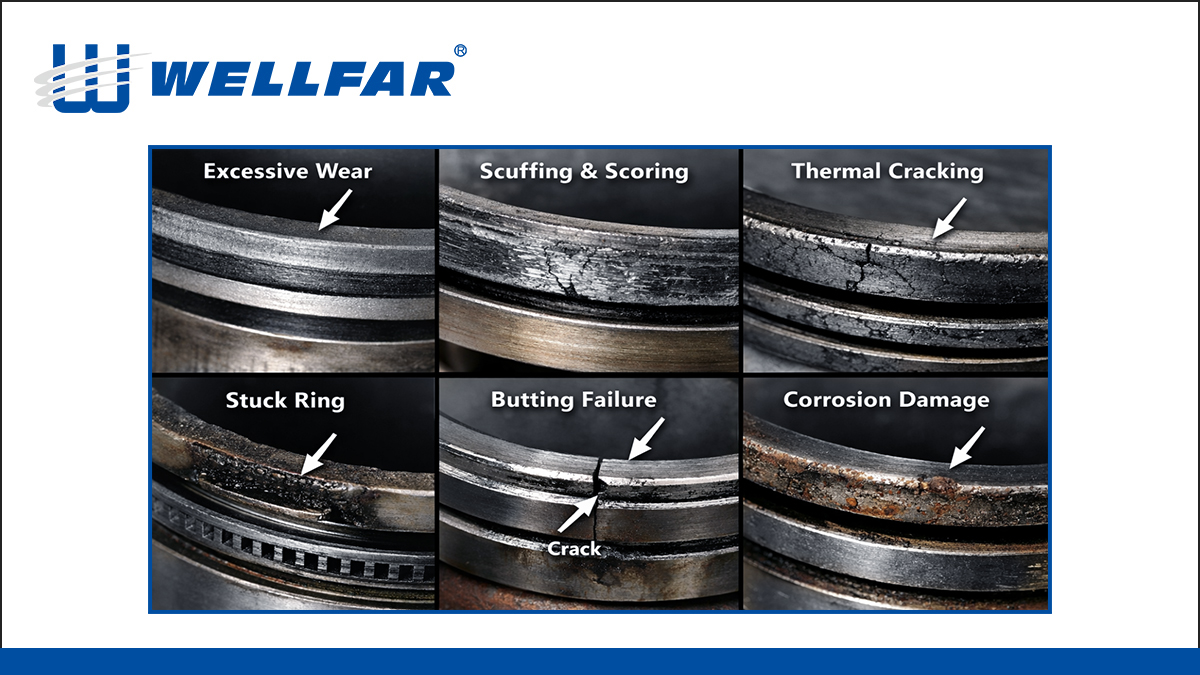
Disel Engine First Piston Ring Failure Mode Analysis
2026-04-16 05:35